








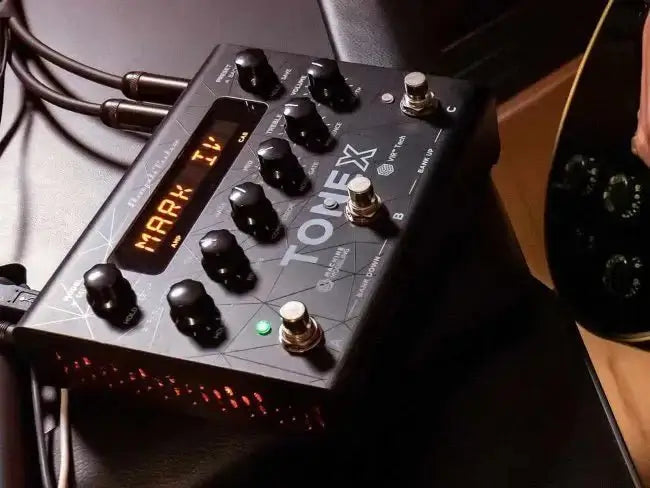
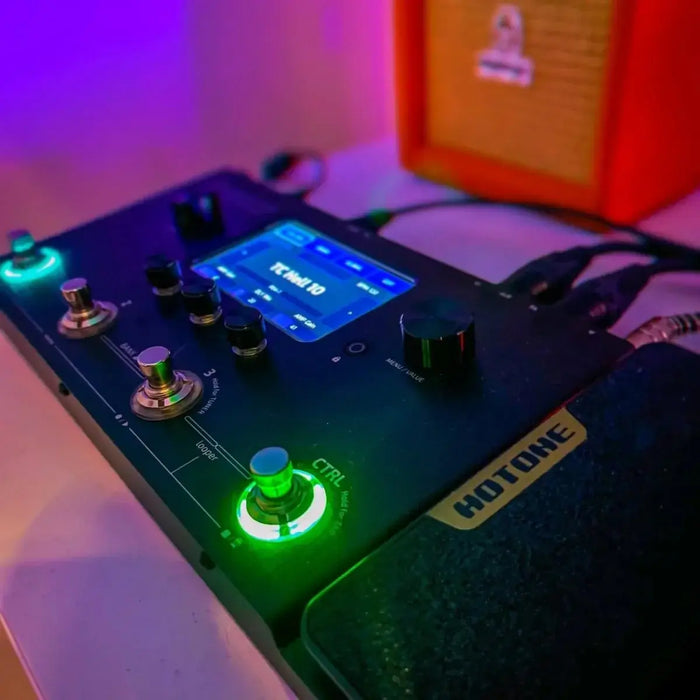
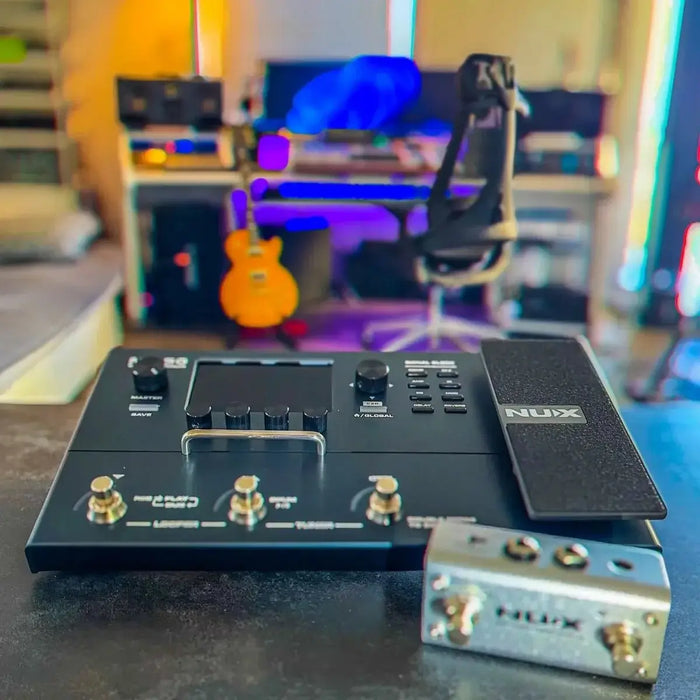

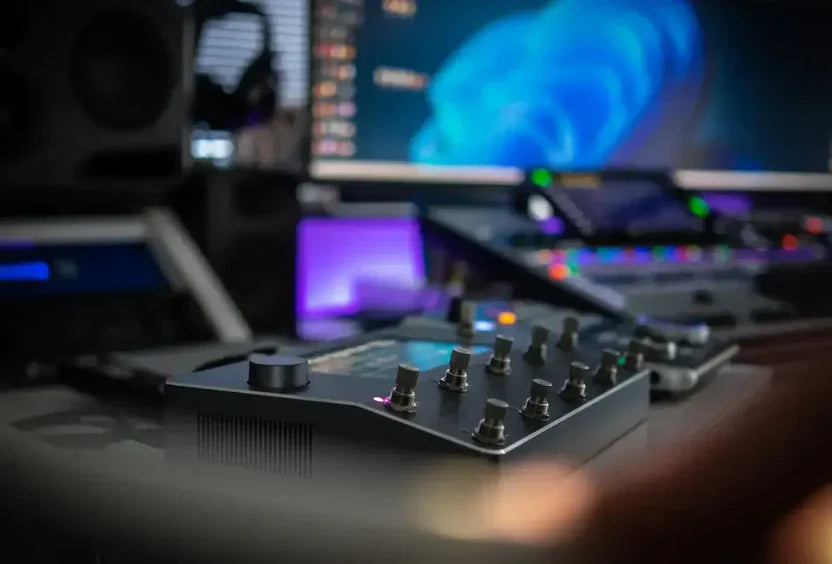
The floor modeler market in 2026 is more exciting than ever: Line 6 has launched the next-gen Helix Stadium, Fractal Audio has updated its lineup with Mark II Turbo models, and Neural DSP released CorOS 4.0 plus a brand new Quad Cortex Mini. Each represents a different philosophy toward amp modeling.
Modelers have officially outsold traditional tube amps, and the question is no longer "should I go digital?" but "which modeler is right for me?"
Last reviewed: August 2026.
Quick Comparison Table (February 2026)
| Feature | Line 6 Helix Stadium | Fractal FM3 Mk II Turbo | Neural DSP Quad Cortex |
|---|---|---|---|
| Price | $1,799 (Stadium) / $2,199 (XL) | $1,099 | $1,799 |
| Release | Shipping Feb 2026 | Current model | Updated w/ CorOS 4.0 |
| Amp Models | 100+ (HX + new Agoura amps) | 280+ (Ares) | 50+ models + Neural Captures V2 |
| Unique Feature | Showcase automation engine | Best amp modeling accuracy | Neural Capture (profile real amps) |
| Footswitches | 10 (Stadium) / 14 (XL) | 3 | 8 |
| Touchscreen | No (LCD displays) | No (LCD, larger in Mk II) | Yes (7" color) |
| USB Audio | 8x8 | 4x4 | 8x8 |
| Effects | 300+ effects | Most Fractal effects | 70+ effects |
| Community | Massive (CustomTone) | Large (AxeChange) | Growing (Cortex Cloud) |
| Weight | ~6.6 kg | 1.7 kg | 1.97 kg |
| Best For | Live performance, automation | Studio, compact rigs | Versatility, amp profiling |
Line 6 Helix Stadium: The Next-Gen Live Platform
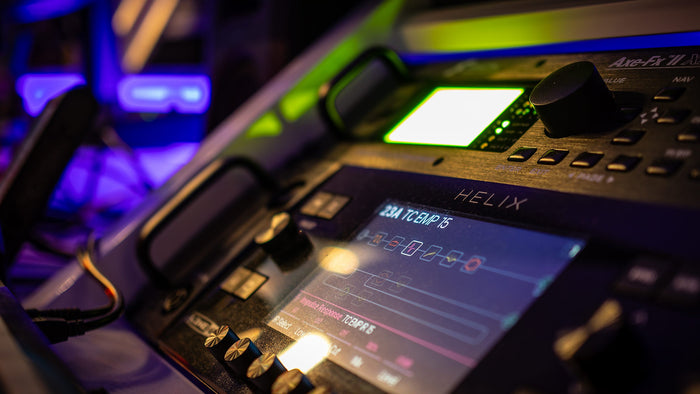
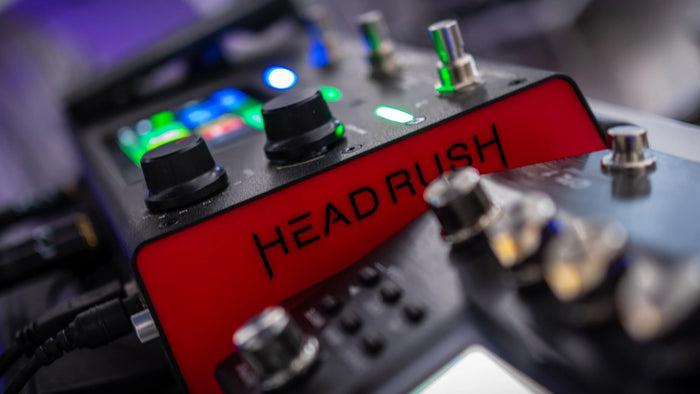
The Helix Stadium (released late 2025, now shipping worldwide) replaces the original Helix as Line 6's flagship floor modeler. It brings dramatically improved amp modeling and the revolutionary Showcase automation engine.
What's New in Helix Stadium
- Showcase automation engine (firmware 1.2, Dec 2025) — control backing tracks (up to 8 stereo audio tracks), lighting cues, preset changes, looper functions, and external gear, all automated on a timeline. This is a game-changer for live performance.
- 7 new Agoura amp channels from 3 new amps
- Stadium XL ($2,199) — adds 4 FX loops and 4 drum pads
- Wi-Fi transfer — load songs and presets from the Helix Stadium app wirelessly
Strengths
- Best live workflow — snapshots, command center, Showcase automation, and 10-14 footswitches
- Most intuitive UI — the signal path is clear and easy to edit
- Massive community — thousands of free presets on CustomTone
- HX Edit software — excellent desktop editor
- Native plugin — use Helix tones in your DAW (separate purchase)
Explore our Line 6 Helix preset collection for professional metal and rock tones.
Note: The original Helix Floor is now available at a reduced price of $1,299 — excellent value if you don't need Showcase.
Fractal Audio FM3 Mk II Turbo: The Tone Purist's Choice
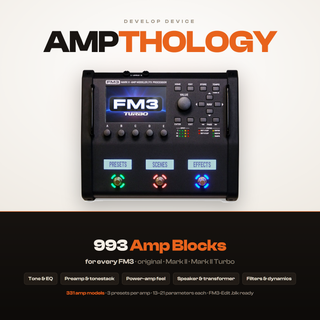
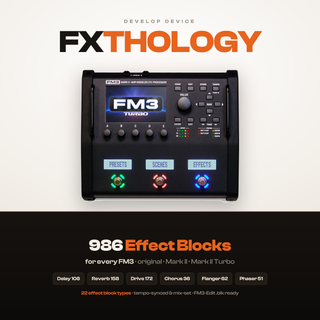
The FM3 offers arguably the most accurate amp modeling in the industry. Fractal's Ares modeling technology has been refined over 15+ years and is used by some of the world's top guitarists. At $1,099, the Mark II Turbo is now the most affordable entry into Fractal's ecosystem.
Strengths
- Best amp modeling accuracy — widely considered the gold standard
- 280+ amp models — the largest model library of any platform
- Compact size — 1.7 kg, fits on any pedalboard
- Regular free firmware updates — Fractal continuously improves amp models (FW 12+)
- Excellent high-gain tones — the reason metal players gravitate toward Fractal
- Mark II Turbo improvements — ~10% more DSP power, larger footswitch displays
Check out our FM3 presets — designed by professional metal producers for mix-ready tones.
Neural DSP Quad Cortex: The Modern Innovator
The Quad Cortex introduced Neural Capture — the ability to profile real amplifiers and pedals with remarkable accuracy. With CorOS 4.0 (January 2026) and the new Neural Capture V2 technology, Neural DSP has raised the bar even further.
What's New (2025-2026)
- CorOS 4.0 (January 2026) — major update with support for the new Quad Cortex Mini
- Neural Capture V2 (CorOS 3.3) — cloud-trained technology, described as "a generational leap in modelling technology"
- Quad Cortex Mini — announced at NAMM 2026, a more compact version (€1,299)
- Live Tuner in Gig View — expanded LED brightness and scene navigation
Strengths
- Neural Capture V2 — profile any real amp, pedal, or signal chain with improved accuracy
- Best user interface — 7" touchscreen is intuitive and fast
- Fastest setup time — dial in great tones in minutes
- Cortex Cloud — download community captures and presets
- Quad Cortex Mini option — compact alternative for smaller budgets/pedalboards
Browse our Quad Cortex captures and presets for professionally crafted tones.
Sound Quality Comparison: Who Wins?
In 2026, all three are remarkably close in sound quality. According to Sweetwater's comprehensive comparison, they all "sound near-indistinguishably incredible." However, subtle differences exist:
- Fractal FM3 edges ahead in amp accuracy — especially for high-gain tones where pick dynamics and harmonic response matter most
- Quad Cortex excels with Neural Capture V2 — cloud-trained captures are a significant leap in profiling accuracy
- Helix Stadium has improved dramatically with new Agoura amps, and its effects (especially modulation and delay) are class-leading
Quad Cortex vs the Rest of the Field
Most people who land here are not choosing between all three units at once. They are comparing the Quad Cortex against one specific rival, so here is each of those pairings on its own.
Quad Cortex vs Helix Stadium
This is the pairing most people arrive with, and the table above already frames it: the same money, opposite priorities. The Helix Stadium gives you ten footswitches, the Showcase automation engine and an effects library of over three hundred blocks, and it is the unit built around performing a structured set with your feet. The Quad Cortex gives you Neural Capture, a 7" colour touchscreen and a box that weighs 1.97 kg against the Stadium's roughly 6.6 kg. Neither of them sounds like the weak option in 2026, so the honest question is what you will actually do with it. If your set is planned in advance and switched live, the Stadium is the better instrument. If you want to profile your own amps, carry the board yourself and be finished dialling in quickly, the Quad Cortex is. The larger Stadium XL is covered right below.
Quad Cortex vs Fractal FM3
Fractal against Neural DSP is the other pairing that dominates this question, and it splits cleanly along modeling versus profiling. The FM3 Mk II Turbo carries the far larger amp library, 280+ Ares models against the Quad Cortex's 50+ models, and Fractal's modeling accuracy is what the rest of the field gets measured against, especially at high gain. It does that with three footswitches and an LCD, so anything beyond a small set means an external switcher. The Quad Cortex answers with Neural Capture, the touchscreen, eight footswitches, 8x8 USB audio against the FM3's 4x4, and Cortex Cloud. Both are pedalboard sized: 1.7 kg for the FM3, 1.97 kg for the Quad Cortex. Take the FM3 if amp accuracy and deep editing are what you are buying and the switch count does not bother you. Take the Quad Cortex if you want your own amps captured and a unit you can operate without learning a menu tree. If the switch count is the sticking point, the FM9 comparison further down is the one you want. I build for both: FM3 presets and Quad Cortex captures.
Quad Cortex vs the original Helix
Plenty of these searches are not about the Stadium at all. The original Helix Floor is still sold and still one of the most common things a Quad Cortex gets compared with. It runs the older HX modeling engine rather than the new Agoura amps, so it does not match the Stadium on amp tone, but it keeps what made the platform popular: the effects library, the readable signal path, HX Edit and the CustomTone archive. Against the Quad Cortex the trade is profiling and portability on one side, effects depth and a mature ecosystem on the other, and the Helix is the heavier unit of the two by a wide margin. If you go that way, my Helix presets load on the Floor and the LT alike.
Quad Cortex vs Helix Stadium XL
The XL is the same platform as the Helix Stadium with more hardware around it: 14 footswitches instead of 10, four extra FX loops and four drum pads. Against the Quad Cortex that makes the choice fairly clean. If you switch a lot of sounds with your feet, run outboard pedals in loops or drive a whole show from the Showcase timeline, the XL wins on sheer control surface. The Quad Cortex answers with the 7" touchscreen, Neural Capture and a board that weighs a fraction of the XL. I would pick the XL for a big structured live set and the Quad Cortex for a rig I carry myself.
Quad Cortex vs Kemper Profiler
These two are the profiling units of the group, and they solve the same problem from opposite ends. The Kemper has been profiling real amps for well over a decade, so its rig library is the deepest one out there, and the Profiler Stage puts that engine into a floorboard. The Quad Cortex is the newer design: capturing is done on the touchscreen in a few minutes, captures sync through Cortex Cloud, and the unit doubles as a full modeler with its own amp and effects models. Choose the Kemper if the archive of existing rigs and its long track record matter most. Choose the Quad Cortex if you want to make your own captures often and want a modern interface while doing it. For the metal angle specifically I go into more detail in my Axe-FX III vs Kemper vs Quad Cortex guide.
Quad Cortex vs Fractal FM9
If the FM3 is the Fractal unit that loses to the Quad Cortex on switching and screen size, the FM9 is the one that does not. It runs the same Ares modeling and the same enormous amp library as the FM3, with more DSP headroom and far more footswitches, which is why it is the Fractal most often cross-shopped against the Quad Cortex rather than against the FM3. The split stays the same as everywhere else in this comparison: Fractal gives you depth of editing and amp accuracy, Neural DSP gives you profiling and speed. If you already know you enjoy deep parameter editing, the FM9 is the better home. If you open a menu tree and immediately want to close it, the Quad Cortex is.
Quad Cortex vs Nano Cortex
The Nano Cortex is not a cheaper Quad Cortex, it is a smaller idea. It carries Neural Capture and connects to the same Cortex Cloud ecosystem, but it is built around one rig at a time rather than the Quad Cortex's large multi-block signal chains, and it has no touchscreen. It suits a player who wants one or two great captured sounds on a small board or in front of a laptop. It does not replace a Quad Cortex if you build complex routings or need many effects blocks running at once. I have a dedicated breakdown of that pair in Quad Cortex vs Nano Cortex.
Quad Cortex Mini vs FM3 and Helix Stadium
The Quad Cortex Mini runs the same CorOS software and the same Neural Captures as the full Quad Cortex in a smaller enclosure with fewer footswitches. Against the FM3 the trade is the familiar one: the Mini gives you profiling, cloud captures and a touch interface, the FM3 gives you the larger amp library and Fractal's editing depth, and both are small enough for a pedalboard. Against the Helix Stadium it is not really a like for like fight at all. The Stadium is a full sized live control surface with the Showcase engine behind it, the Mini is a compact sound source. If your reason for looking at the Mini is board space, compare it with the FM3. If your reason is running a show, look at the Stadium.
Where the Helix LT fits
The Helix LT is the stripped back version of the original Helix Floor: the same HX modeling engine, fewer connections and a simpler control surface. It is worth knowing about here because it is the cheapest way into the Helix ecosystem and its presets are interchangeable with the rest of the family, so my Helix presets load on it as well. Against the Quad Cortex it makes the same argument the other Line 6 units make, a mature effects library and a signal path you can read at a glance, without the profiling side.
Size and Pedalboard Space
Physical footprint decides this comparison more often than people expect, and the weights in the table above tell most of the story. The Quad Cortex at 1.97 kg and the FM3 at 1.7 kg are pedalboard sized units you can carry in one hand. The Helix Stadium at around 6.6 kg is a different class of object, and the Stadium XL is larger still because of the extra switch row. If your board already exists and has a gap in it, measure the gap before anything else: the Quad Cortex, Quad Cortex Mini, Nano Cortex and FM3 are the units in this comparison that tend to fit into one, and the Stadium and Stadium XL are the ones you build a board around. For the Helix Stadium's own specifications and availability I keep a separate article: Helix Stadium and Stadium XL specs and release date.
Decision Guide
| Your Priority | Best Choice |
|---|---|
| Best amp tone accuracy | Fractal FM3 ($1,099) |
| Best live performance workflow | Helix Stadium ($1,799) |
| Live automation (backing tracks, lighting) | Helix Stadium XL ($2,199) |
| Profile real amps | Quad Cortex ($1,799) |
| Most user-friendly | Quad Cortex |
| Tightest budget | Fractal FM3 ($1,099) |
| Biggest amp model library | Fractal FM3 (280+) |
| Most footswitches | Helix Stadium XL (14) |
| Most compact | Fractal FM3 (1.7 kg) |
| Budget compact option | Quad Cortex Mini (€1,299) |
For a broader comparison including the Kemper Profiler, read our Axe-FX III vs Kemper vs Quad Cortex for Metal guide.
FAQ — Frequently Asked Questions
Which floor modeler sounds best for metal?
The Fractal FM3 is widely considered the best for high-gain tones due to its Ares modeling technology and 280+ amp models (including every major metal amp). The Quad Cortex is a close second, especially with Neural Capture V2's cloud-trained accuracy.
Can I use the FM3 for live gigs with only 3 footswitches?
Yes, but it requires using scenes and an expression pedal creatively. Many FM3 users add an external MIDI controller for more switches. The FM9 ($1,799) is a better live choice if you need more switches without external gear.
Is the Quad Cortex worth the same price as the Helix Stadium?
Both are $1,799, but for very different reasons. The Helix Stadium offers more footswitches, the Showcase automation engine, and a mature effects library. The Quad Cortex offers a touchscreen, Neural Capture profiling, and a more compact form factor. Choose based on whether you need automation/effects (Helix) or profiling/portability (QC).
What is the Quad Cortex Mini?
Announced at NAMM 2026, the Quad Cortex Mini is a more compact version of the Quad Cortex at €1,299. It runs the same CorOS 4.0 software and supports Neural Captures, making it an excellent option for players who want the QC experience in a smaller form factor.
Should I wait for the Line 6 Helix Stadium or buy the original Helix?
The Helix Stadium is now shipping worldwide (February 2026). If you can budget $1,799, it's the clear choice with its improved amps and Showcase engine. However, the original Helix Floor at a reduced $1,299 remains a capable unit if budget is tight.
What are the best Quad Cortex alternatives?
It depends on which part of the Quad Cortex you are trying to replace. For profiling real amps, the Kemper Profiler and the smaller Nano Cortex do the same job. For a large amp library and deep editing, the Fractal FM3 and FM9. For live control and automation, the Helix Stadium or Stadium XL. For the same Neural DSP sound in less space, the Quad Cortex Mini. There is no single drop-in replacement because no other unit combines profiling, a touchscreen and a full modeler in quite the same package.
Is the Nano Cortex just a smaller Quad Cortex?
No. It shares Neural Capture and the Cortex Cloud ecosystem, but it is built around a single rig rather than the large multi-block chains the Quad Cortex handles, and it has no touchscreen. Think of it as a capture player and a compact amp in a box rather than a shrunken Quad Cortex.
How does the Kemper compare with the Quad Cortex for capturing amps?
Both produce a digital copy of a real amp and both do it well. The Kemper has the longer history and by far the larger library of existing rigs to download. The Quad Cortex makes the process faster and more approachable on its touchscreen and syncs the results through Cortex Cloud. If you plan to capture your own amps regularly, the Quad Cortex workflow is the friendlier one.
Should I get the FM3 or the FM9 against a Quad Cortex?
If footswitch count is what pushes you away from the FM3, the FM9 is the Fractal to compare with the Quad Cortex, not the FM3. It has the same modeling with more processing headroom and a live friendly control surface. The FM3 remains the better answer only when board space and budget outweigh switching.
Can I use third-party presets and captures on these modelers?
Yes, and it is the fastest way to make any of them sound finished. The Quad Cortex loads captures and presets through Cortex Cloud, the Helix family shares presets across its units, and Fractal units import presets directly. That is what I build here: Quad Cortex captures and presets, Helix presets and FM3 presets, all mixed and checked in a real mix rather than dialed in solo.
From our shop
We make the presets and templates for the gear in this article — here is what fits.



Leave a comment
All comments are moderated before being published.
This site is protected by hCaptcha and the hCaptcha Privacy Policy and Terms of Service apply.