


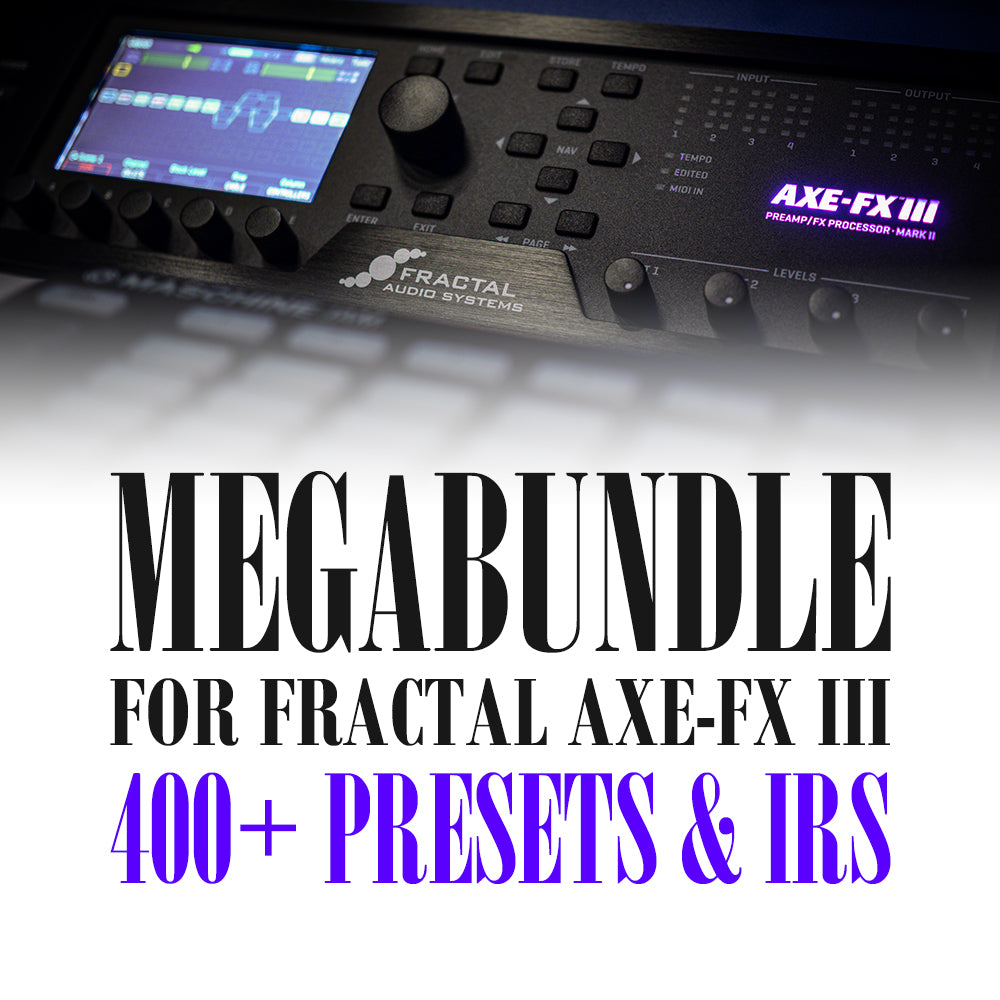
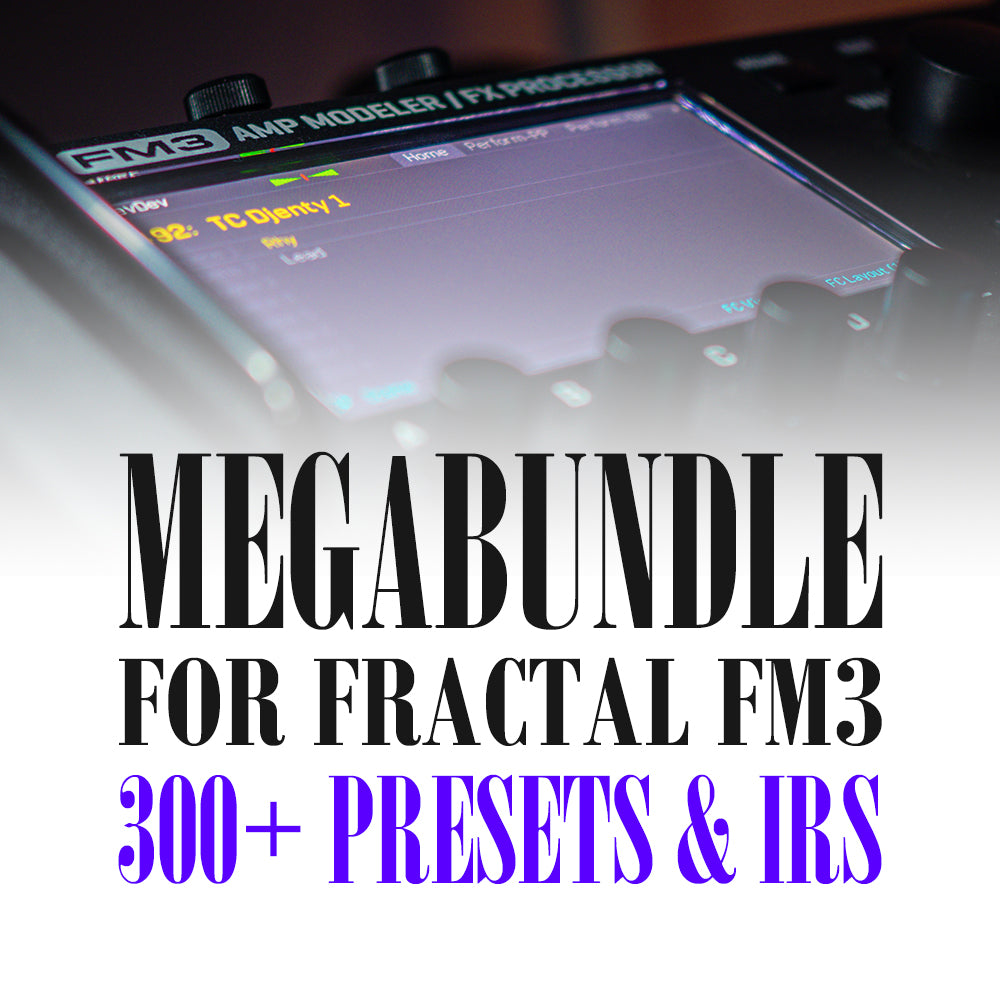


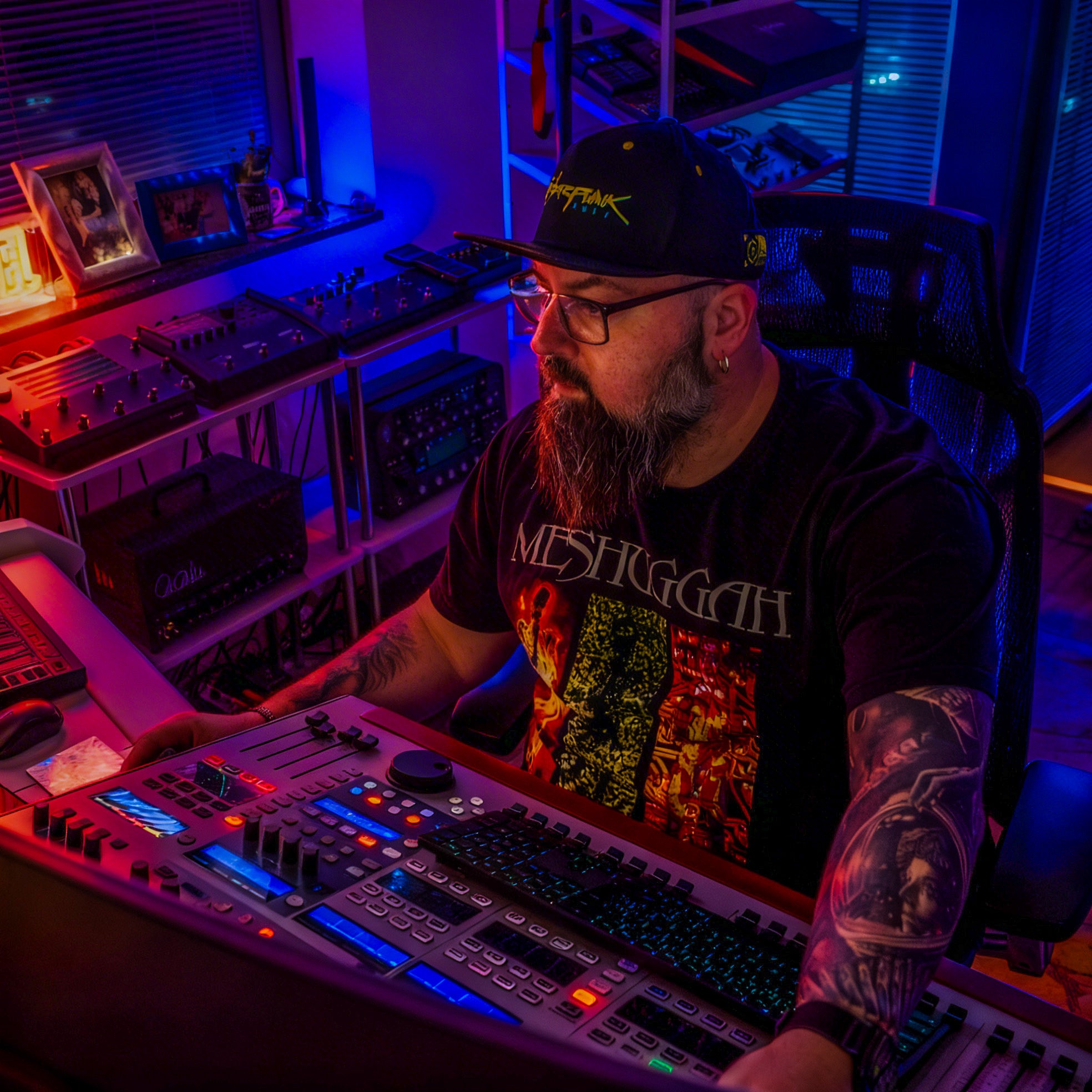

Fractal Audio offers three flagship modeling platforms in 2026 — all now available as Mark II Turbo variants with enhanced DSP power and improved displays. The Axe-FX III, FM9, and FM3 share the same core amp modeling technology but differ significantly in form factor, I/O, processing power, and price.
As a company that creates professional Fractal Audio presets, we've spent thousands of hours with all three units. Here's our definitive comparison to help you make the right choice.
Quick Comparison Table (Mark II Turbo — Current Models)
| Feature | Axe-FX III Mk II Turbo | FM9 Mk II Turbo | FM3 Mk II Turbo |
|---|---|---|---|
| Price | $2,499 | $1,799 | $1,099 |
| Form Factor | Rack (3U) | Floorboard | Compact Floorboard |
| DSP Power | 2x SHARC+ (full, +25% Turbo) | 4 DSP cores (full power) | 3-core Griffin (+10% Turbo) |
| Latest Firmware | FW 32.00 (beta) | FW 11+ | FW 12+ |
| Amp Models | 280+ | 280+ | 280+ |
| Effects | All effects, unlimited blocks | All effects, most scenarios | All effects, limited blocks |
| Footswitches | Requires FC-6/FC-12 | 9 (larger displays in Mk II) | 3 (larger displays in Mk II) |
| Audio I/O | 4 in / 8 out + SPDIF + AES | 4 in / 4 out + SPDIF | 2 in / 4 out + SPDIF |
| USB Audio | Yes (8x8) | Yes (8x8) | Yes (4x4) |
| Weight | 5.9 kg | 4.1 kg | 1.7 kg |
| Scenes | 8 | 8 | 8 |
| Channels/Block | 4 | 4 | 4 |
What's New: Mark II Turbo (2025-2026)
All three units are now available as Mark II Turbo models. Key improvements:
- More DSP power — the Turbo variants add ~10-25% additional processing headroom
- Larger footswitch displays — double-height characters with bolder, more readable fonts on FM9 and FM3
- Firmware 32.00 (beta) — Axe-FX III features enhanced Auto-Swell with dynamic threshold tracking in the Volume block
- FM9-Edit 6.00 — released December 2025, improved desktop editing experience
Axe-FX III: The Studio Powerhouse
The Axe-FX III is Fractal Audio's flagship — a rack-mounted unit with maximum DSP power and the most extensive I/O options. Used by Steve Vai, John Petrucci, Tosin Abasi, Misha Mansoor, and hundreds of touring professionals.
Best For:
- Studio recording — the 8x8 USB audio interface and extensive analog I/O make it ideal for re-amping and complex routing
- Touring professionals — paired with an FC-12 foot controller, it's the most flexible live rig possible
- Complex signal chains — dual DSP + Turbo boost means you'll never run out of processing power, even with parallel paths, dual amps, and stacked effects
Browse our Axe-FX III preset collection for professionally crafted metal and rock tones.
FM9: The Best of Both Worlds
The FM9 Mark II Turbo combines full processing power with an integrated 9-switch pedalboard. Its four DSP cores allow the most complex presets outside the Axe-FX III, and the updated larger displays make live navigation easier than ever. It's the most popular Fractal unit for gigging musicians.
Best For:
- Gigging guitarists — one unit replaces your entire pedalboard + amp + cab
- Players who need lots of footswitches — 9 switches with improved displays, no external controller needed
- Those stepping up from the FM3 — same amp models with significantly more DSP headroom
FM3: Compact Power
The FM3 Mark II Turbo packs Fractal's amp modeling into the smallest, lightest, and most affordable package. The three-core "Griffin" architecture with ~10% Turbo boost runs the same amp models and effects — you just have fewer simultaneous blocks available. At $1,099, it's an incredible value.
Best For:
- Pedalboard integration — small enough to sit alongside traditional pedals
- Budget-conscious players — same legendary amp models at the most accessible price
- Bedroom/home studio players — 4x4 USB audio is plenty for recording
- Fly-in gigs — at 1.7 kg, it fits in a backpack
Check out our FM3 preset collection — all presets optimized for the FM3's DSP allocation.
Sound Quality: Is There a Difference?
All three units use identical amp modeling algorithms. A Marshall Plexi on the FM3 sounds exactly the same as on the Axe-FX III. The difference is in how many effects you can run simultaneously, not in sound quality.
The Axe-FX III and FM9 (more DSP cores) can run more complex signal chains — dual amps, parallel paths, and more effects blocks. The FM3 may require simplifying complex presets, but for most guitarists, its processing power is more than sufficient.
Decision Guide: Which Should You Buy?
| Your Situation | Best Choice | Why |
|---|---|---|
| Studio recording focus | Axe-FX III ($2,499) | Best I/O, 8x8 USB, re-amping |
| Touring professional | Axe-FX III + FC-12 | Maximum power and flexibility |
| Gigging musician | FM9 ($1,799) | Full power in pedalboard format |
| Home studio + occasional gigs | FM9 | Versatile for both scenarios |
| Bedroom player / budget | FM3 ($1,099) | Same tones, best value |
| Pedalboard integration | FM3 | Compact enough to pair with pedals |
| Travel/fly-in gigs | FM3 | 1.7 kg, fits anywhere |
What About Competing Platforms?
Fractal isn't the only option. See our other comparisons:
- Axe-FX III vs Kemper vs Quad Cortex for Metal
- Fractal vs Neural DSP: Advantages & Disadvantages
- AX8 vs AM4: The Floorboard Evolution
- Is the Axe-FX II Still Worth It?
FAQ — Frequently Asked Questions
Does the FM3 sound worse than the Axe-FX III?
No. All three Fractal units use identical amp modeling algorithms. A preset on the FM3 will sound the same as on the Axe-FX III. The only difference is the number of simultaneous effects blocks you can run — the FM3 has fewer DSP cores, which means fewer effects, not worse sound.
Can I use Axe-FX III presets on the FM3?
Yes, but complex presets may need simplification to fit within the FM3's DSP budget. Our FM3-specific presets are optimized to sound great while staying within the FM3's processing limits.
Is the FM9 worth $700 more than the FM3?
If you need more than 3 footswitches for live use, or if you regularly build complex signal chains with dual amps and lots of effects, yes. The four DSP cores are very noticeable when building intricate presets. For bedroom use, the FM3 is usually sufficient.
Should I buy a used Axe-FX II instead of a new FM3?
The FM3 uses newer, significantly better amp modeling technology (Ares 2.0+). Even though the Axe-FX II was the flagship, the current FM3 outperforms it in sound quality. Read our Axe-FX II buyer's guide for more details.
What's the difference between Mark II and Mark II Turbo?
The Turbo variants add approximately 10-25% more DSP processing power, plus larger and easier-to-read footswitch displays. The sound quality is identical — you just get more headroom for complex presets. If buying new in 2026, the Turbo versions are the current models available.



Leave a comment
All comments are moderated before being published.
This site is protected by hCaptcha and the hCaptcha Privacy Policy and Terms of Service apply.